
Finally, Something Sales and Marketing Can Agree On

For as long as B2B companies have had separate sales and marketing teams, there has been friction. It rarely shows up as open conflict. Instead, it sits quietly beneath pipeline reviews and quarterly forecasts. Marketing focuses on reach, engagement, and influence. Sales focuses on meetings, opportunities, and revenue. Both teams care about pipeline. They simply approach it from different vantage points.
The tension usually reveals itself in subtle ways. Marketing sees strong activity and campaign performance. Sales still feels like access to decision-makers is difficult. Leadership wants predictable growth but wonders why alignment remains elusive.
Very few channels genuinely serve both sides at the same time. When designed with intention, a podcast can become one of those rare shared assets. Treated correctly, it functions as a go-to-market infrastructure that supports both teams in meaningful ways.
The Real Source of Sales and Marketing Friction
Marketing is typically rewarded for generating awareness and interest. Impressions, engagement, traffic, downloads, campaign performance, and marketing-influenced pipeline all signal momentum. These metrics matter. They contribute to long-term growth and market presence.
Sales operates under a different set of incentives. Meetings booked. Second conversations secured. Opportunities created. Revenue closed. Forecast confidence strengthened. Progress is measured by movement inside accounts.
The friction begins when awareness does not consistently translate into access.
A campaign may generate significant engagement. A report may be downloaded widely. Ads may reach thousands of individuals within priority accounts. Yet sales teams may still struggle to secure time with decision-makers who influence buying decisions.
That gap creates perception challenges. Marketing believes it is building momentum. Sales feel the starting point remains cold.
Account-based marketing was introduced to address this by narrowing focus and increasing personalization. It has improved coordination and targeting in many organizations. Even so, most ABM programs still rely heavily on advertising, outbound sequences, gated content, and events. These channels create visibility and targeted reach. They do not always create dialogue.
Dialogue is what moves the pipeline forward.
The Missing Layer Between Awareness and Meetings
Within most B2B funnels, there is a quiet gap between engagement and conversation.
Someone becomes aware of your brand.
They interact with your content.
They download a resource.
That activity signals interest. It does not automatically lead to a conversation with a decision-maker.
What closes that gap is trust and proximity.
Trust develops through familiarity. Proximity develops through interaction. Static assets and targeted impressions rarely generate sustained interaction on their own.
Structured, conversation-led channels address this gap directly.
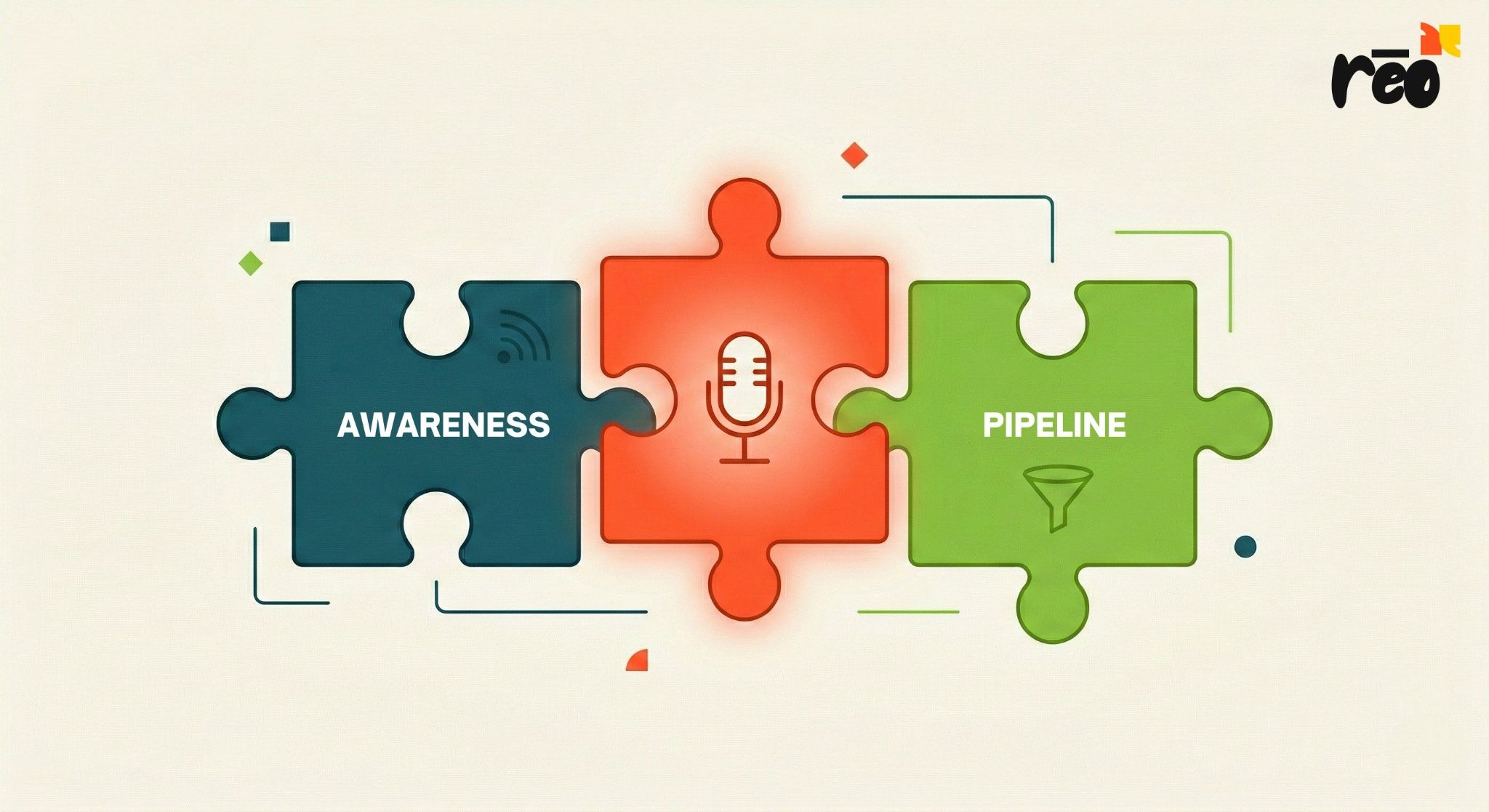
A strategically designed podcast sits between awareness and pipeline. It creates repeated, thoughtful dialogue with the same personas your sales team is pursuing. That shift creates momentum that traditional campaigns struggle to replicate.
Why Podcasts Work for Marketing
From a marketing perspective, a podcast builds depth and credibility.
When leadership engages in thoughtful conversations with industry peers, the brand becomes an active participant in its category. Buyers respond to organizations that contribute meaningfully to industry conversations. They recognize the difference between thought leadership and promotion.
A podcast also creates a consistent content engine. A single recorded conversation can generate short-form video, written insights, email sequences, website articles, and sales enablement material. Instead of starting from a blank page each week, marketing teams draw from real conversations grounded in current market realities.
These conversations surface valuable intelligence. Leaders describe their priorities, constraints, and internal dynamics. Marketing gains access to authentic language and real challenges. That information strengthens messaging across campaigns, nurture streams, and positioning efforts.
In this way, the podcast supports brand credibility while fueling the broader marketing ecosystem.
Good Read: Turn Your Podcast Into a Pipeline: Generating 30+ Assets for LinkedIn, Email, and Sales
Why Podcasts Work for Sales
From a sales perspective, the value becomes clear quickly.
Enterprise selling depends heavily on access. Decision-makers are busy. Cold outreach competes with constant noise. Even well-crafted personalization can struggle to stand out.
An invitation to participate in a thoughtful industry conversation creates a different dynamic. It signals respect for expertise and provides a platform for visibility. The connection begins around shared ideas rather than commercial intent.
When a leader from a target account joins a conversation, a relationship begins. The discussion offers insight into how that leader thinks and what matters most inside their organization. Sales teams gain context that shapes future outreach and follow-up.
Familiarity builds naturally through this process. In complex sales environments, familiarity reduces hesitation. It increases responsiveness and improves the quality of discovery conversations.
For sales teams, the podcast becomes a structured access channel that opens doors.
Good Read: How Founders Can Use Podcasts to Build Trust Before the First Sales Call
A Shared Asset Instead of a Marketing Initiative
The greatest impact occurs when a podcast is designed as shared infrastructure rather than a standalone marketing initiative.
The guest list should reflect strategic accounts, high-priority segments, and influential voices within your ecosystem. This alignment turns the podcast into a direct extension of ABM strategy.
Sales contributes target accounts and relationship insights. Marketing shapes positioning and narrative. Leadership provides credibility and visibility.
Measurement evolves as well. Instead of focusing solely on downloads or subscribers, success can be evaluated through the number of ICP conversations created, the quality of follow-up interactions, and influence on pipeline progression.
When structured thoughtfully, the podcast becomes an initiative both teams can support confidently.
Addressing the Skepticism
Questions around ROI are natural. A podcast requires consistency and thoughtful execution. Results build over time.
Compared to large media spends or broad demand generation campaigns, podcast production can operate efficiently while compounding in value. Each episode adds to a growing body of content, credibility, and relationships.
Integration remains critical. A podcast that operates independently from sales motion will underperform. A podcast woven into account strategy, follow-up processes, and enablement efforts strengthens alignment.
In an environment where buyers are increasingly skeptical and digital channels are saturated, authentic conversation stands out. It carries weight because it reflects genuine engagement.
The Alignment Advantage
The greatest benefit of a strategically designed podcast lies in internal alignment.
Marketing gains credible content, executive positioning, and momentum within ABM accounts. Sales gains access, context, and warmer entry points. Leadership gains long-term brand equity and category authority.
Instead of debating attribution models, both teams focus on creating meaningful conversations with the right people.
When conversation becomes foundational, pipeline grows from trust and familiarity rather than forced urgency.
Alignment between sales and marketing often feels aspirational. Building structured dialogue into the go-to-market motion turns that aspiration into a practical reality.
Conversation builds trust. Trust supports the pipeline. And shared ownership of that process strengthens the entire organization.